
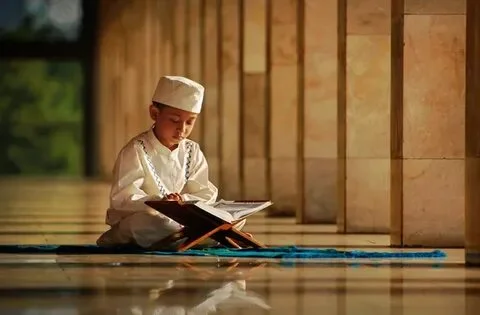
Ramadan is the month of Qur’an — and kids can love it, if we make it gentle
Ramadan has a special place in the heart because it reconnects the home with worship. We hear the Qur’an more, we talk about the Qur’an more, and we naturally want our children to grow up with the Qur’an too. But many parents experience the same struggle every year: the intention is strong in the beginning, then the routine becomes inconsistent, then everyone feels guilty.
The truth is: most kids don’t need a “bigger target.” They need a better routine, one that matches their age, attention span, school schedule, and emotions. When Quran time feels heavy, kids resist. When it feels calm and achievable, kids surprise you with their consistency.
Allah reminds us why Ramadan is connected to Qur’an:
You can read the verse on Quran.com (2:185).
And the Prophet ﷺ gave a timeless encouragement:
You can read it on Sunnah.com (Bukhari 5027) , “The best among you are those who learn the Qur’an and teach it.”
That hadith is powerful for parents because it means something simple: you don’t have to be perfect to start teaching your child consistency. You just need a plan, and the patience to keep it calm.
This blog gives you:
- a realistic Ramadan Quran routine for kids (ages 5–14)
- a 30-day plan that works with school + tiredness + Taraweeh
- parent-tested motivation and discipline tips that don’t turn into pressure
- a printable tracker PDF you can use daily
- and a clean “next step” if you want professional guidance: a free level assessment trial
First: what level is your child actually on?
Before any routine works, you need to know the level, because the routine for a child learning letters is different from the routine for a child reading Qur’an.
Most kids fit into one of these tracks:
Track A: Beginner (letters/joining not stable)
If your child is still learning letter recognition, joining, or correct basic sounds, the fastest progress comes through a structured foundation like Noorani Qaida. When the base becomes strong, Qur’an reading becomes easier and mistakes reduce.
If this is your child, start with Online Noorani Qaida Classes.
Track B: Reader (Nazra but slow, frequent mistakes)
If your child “can read” but struggles with fluency or repeats mistakes daily, they need short daily reading plus gentle correction. This is where one-to-one learning helps a lot because a teacher can correct the exact repeated errors without overwhelming the child.
You can explore the right class path from Courses.
Track C: Intermediate (reads well, needs Tajweed polishing)
If your child reads comfortably but needs improvement in articulation, madd timing, or common rules, Ramadan is a great month to begin simple Tajweed correction.
If this fits, use Tajweed Course (Rules + Practice).
Track D: Memorization (Hifz goals, revision struggle)
If your child is memorizing, the biggest Ramadan problem isn’t memorization, it’s revision consistency. A routine with a revision tracker is more important than adding new pages daily.
For this path, see Online Hifz Program.
If you’re unsure which track your child belongs to, the fastest step is a short assessment where a teacher listens and places the child correctly. You can start from Book Free Trial / Admission.
The parent mindset that makes Ramadan Quran routines succeed
Most parents believe the problem is “my child is not motivated.” In reality, the problem is usually one of these:
- the routine is too long
- the correction style is too strict
- the session happens at the wrong time of day
- the child doesn’t know what success looks like
- the parent is trying to do everything alone
If you fix those five things, Quran consistency becomes much easier. Here’s the mindset shift that works:
Ramadan Quran time for kids is not a performance. It’s a habit.
Habits grow best when they are short, repeatable, and emotionally safe.
So instead of asking, “How do I make my child finish a lot?” ask:
“How do I make Quran time feel easy enough that my child does it daily?”
That one change makes everything else simpler.
The “10-Minute Minimum” routine (the secret weapon for busy families)
Kids are not built for long, quiet study every day, especially in Ramadan when they’re sleeping later, eating differently, and the home schedule changes.
That’s why the most successful families follow this rule:
Minimum goal: 10 minutes/day
Bonus goal: 15–25 minutes/day when the child is fresh
This protects the habit. Even if you’re busy or your child is tired, you can still “win the day” with the minimum. And if you miss a day? No guilt. You restart tomorrow with the minimum.
The best daily schedule for kids (simple 3-block method)
Instead of one long session, split it into small blocks. This reduces resistance and increases consistency.
Block 1: After Fajr (5 minutes)
This is not for “big learning.” It’s for connection.
- A few lines
- A short Qaida exercise
- Listening to a short surah
If your child is too sleepy, don’t force reading, use listening. The point is to keep the identity: “Ramadan mornings include Qur’an.”
Block 2: After school / before Maghrib (10–15 minutes)
This is the main progress block. Most children can focus better here than late at night.
- Beginners: Qaida lesson + practice
- Readers: 5–10 lines Nazra with gentle correction
- Intermediate: one Tajweed focus + short reading
- Hifz: revision + small new portion if the child is fresh
Block 3: Before sleep (2–5 minutes)
This is the “memory lock.”
- repeat the same lines again
- revise the same surah again
- or listen once more
This tiny block makes a big difference because it strengthens retention.
The 30-day Ramadan Quran plan for kids (Ages 5–14)
This plan is designed to be calm and realistic. It focuses on consistency first, then improvement.
Week 1: Make Qur’an time normal (Days 1–7)
This week, your only goal is to build the daily habit without conflict.
If your child is a beginner, Week 1 should feel like foundation-building, letters, joining, basic sounds, and simple reading comfort. This is why Noorani Qaida works so well at this stage; it gives structure and removes confusion.
If your child reads already, Week 1 is about slowing down and reading cleanly, because rushing creates mistakes.
Parents: in Week 1, don’t correct everything. Correct gently and praise effort. If your child sits daily, you’re winning.
Week 2: Improve accuracy (Days 8–14)
Week 2 is where you choose two repeated mistakes and fix only those.
This is the parent strategy that changes everything:
- Choose the top 2 repeated mistakes
- Correct only those for one week
- Ignore the rest for now
- Celebrate improvement
This prevents frustration and keeps the child confident.
If you want professional correction (especially for repeated articulation mistakes), one-to-one teaching helps because the teacher can pinpoint mouth/tongue position quickly. You can check Teachers and choose what fits your family (including female teachers).
Week 3: Build fluency and confidence (Days 15–21)
By Week 3, most kids become more comfortable, if the routine stayed calm.
This is a great week to add listening practice:
- listen to a short surah daily
- repeat after the reciter once
- then read it once
Kids naturally improve pronunciation when they hear consistent examples.
If your child is ready for more structured Tajweed basics, keep it extremely simple: one small concept per day, then apply it in reading. If you want a guided track, use Tajweed Course (Rules + Practice) (even if you only do the basics at first).
Week 4: Protect the habit (Days 22–30)
The last ten days are special, and kids feel the tiredness too.
So don’t increase targets suddenly. Keep the routine steady. Even if the session becomes shorter, keep the minimum alive. The biggest victory is not finishing a huge portion, it’s maintaining the habit through the last ten days and carrying it after Eid.
If your child is in Hifz, Week 4 is the time to protect revision more than new memorization. A strong revision habit beats a rushed new target every time.
The best motivation strategy for kids (that doesn’t feel like bribery)
Motivation becomes toxic when it turns into pressure. But motivation becomes beautiful when it feels like love, progress, and celebration.
Here are three motivation strategies that work without damaging sincerity:
1) Reward consistency, not performance
Don’t reward “perfect reading.” Reward “showing up.”
A sticker for sitting daily builds identity. A small reward for completing a week builds momentum.
2) Use visible progress (kids need to see success)
Kids don’t feel motivated by “be consistent.” They feel motivated by seeing their tracker fill up, seeing stickers, and hearing “you improved.”
That’s why a printable tracker works so well.
3) Keep correction gentle (tone matters more than content)
A child will forget the mistake, but they will remember how they felt during Qur’an time.
Correct softly. Smile. Pick your battles. And focus on the repeated mistake, not everything.
Download the printable tracker (PDF) and use it inside the routine
Here’s the printable tracker you can use for the full month:
✅ Kids Ramadan Quran Tracker (Printable PDF)
How to use it:
- Put it on the fridge or study wall
- Let your child tick the box daily
- Add a sticker in the reward column
- Keep notes short (“Great focus”, “Fixed ‘ع’ sound”, “Read slowly today”)
This turns the routine into something kids can see and feel, not just something parents demand.
Why online classes help kids more in Ramadan (especially one-to-one)
Many parents try to teach at home. That’s a beautiful intention but it often becomes stressful because parents are emotionally involved and kids resist correction from parents more than from teachers.
A teacher brings:
- structured progression
- calm correction
- consistency
- and a neutral learning relationship
This is why one-to-one online Quran classes work extremely well for kids in Ramadan: the teacher corrects accurately, and parents protect the routine without becoming the “discipline police.”
If you want that structure, start with Book Free Trial / Admission and the teacher will place your child in the right track (Qaida, Nazra, Tajweed, or Hifz) and if your family prefers it, you can choose from Teachers including female tutors.
Book a Free Kids Quran Assessment (Ramadan Plan Included)
If you want the fastest progress this Ramadan, start with a level check so your child is placed correctly.
In a free trial, we will:
- assess the child’s level (Qaida / Nazra / Tajweed / Hifz)
- identify the top repeated mistakes
- recommend a simple Ramadan routine
- suggest time slots that fit your country/time zone
Common parent questions
“My child gets bored in 5 minutes.”
That’s normal. Reduce the session to 5–7 minutes and build up slowly. Consistency first, duration later. Use the PDF tracker to make it visual.
“My child refuses to read with me.”
Also common. Many kids respond better to teachers than parents. A one-to-one teacher gives calm correction without family tension. Try a level check using Book Free Trial / Admission.
“Should we focus on finishing Qur’an in Ramadan?”
For kids, the priority is habit + correctness. Finishing is a beautiful goal, but a child who learns consistency in Ramadan gains a lifelong gift.
“What course is best for my child?”
- beginner → Online Noorani Qaida Classes
- reading improvement → explore via Courses
- Tajweed polishing → Tajweed Course (Rules + Practice)
- memorization → Online Hifz Program
Final reminder: keep it calm, keep it consistent
A child who sits with Qur’an daily in Ramadan, even for 10 minutes, has done something عظیم. That routine shapes identity. It builds love. And it makes it much easier to continue after Eid.
Your goal is not to create pressure. Your goal is to create a home where Qur’an is normal, safe, and consistent.
Start today with the minimum. Use the tracker. And if you want help placing your child correctly and fixing repeated mistakes faster, begin with a free assessment through

