

Tajweed Classes Online: Learn to Recite the Quran Correctly from Home
For many Muslims, reciting the Quran is one of the most meaningful parts of daily life. We recite in prayer, we teach our children to read it, and we hope to grow closer to the words of Allah with every page. Yet many learners, whether they are seven or seventy, quietly wonder: Am I pronouncing this correctly?
That question is exactly where Tajweed comes in. And today, you no longer need to travel to a local mosque or search for a teacher in your neighbourhood to learn it. Tajweed classes online allow families and individuals in the USA, UK, Canada, Australia and beyond to learn correct Quran recitation from a qualified teacher, live, from the comfort of home.
In this guide, we will explain what Tajweed is, why it matters, how online Tajweed lessons work, what you will learn, and how to choose the right teacher for yourself or your child. Whether you are a parent looking for a gentle start for your child or an adult who feels nervous about reading aloud, this article is written for you.
What Is Tajweed?
The word Tajweed comes from an Arabic root that carries the meaning of improving, doing something well, or making it excellent. In the context of the Quran, Tajweed is the set of rules that guide us to pronounce every letter correctly, give each sound its proper length and quality, and recite the way the Quran has been passed down from teacher to student through generations.
Put simply, Tajweed answers practical questions such as:
- Where in the mouth or throat does this letter come from?
- How long should I hold this vowel sound?
- When should a sound be clear, and when should it blend into the next letter?
- Where is it appropriate to pause, and how do I begin again?
Tajweed is not meant to make recitation difficult or intimidating. It is a way of protecting the beauty and clarity of the Quran and helping us recite with care and respect. Because Arabic has sounds that do not exist in English, learning these rules with a teacher who can hear and correct you makes a real difference.
Why Should You Learn Tajweed?
Many learners can read Arabic letters but still feel unsure about their recitation. Learning Tajweed helps in several practical ways.
Correct Pronunciation
Some Arabic letters sound very close to each other, such as ث, س and ص, or ح and ه. Mixing them up can change how a word sounds, and in some cases it can affect the meaning. Tajweed trains your mouth and ear to tell these letters apart.
Avoiding Common Recitation Mistakes
Beginners and even long-time readers often make similar errors: shortening or stretching vowels, pronouncing heavy letters too lightly, skipping the gentle nasal sound known as ghunnah, or pausing in awkward places. A teacher who understands Tajweed can gently identify these habits before they become permanent.
Growing in Confidence
A lot of adults avoid reciting aloud in front of family or in congregation because they fear making mistakes. As your recitation becomes more accurate, that hesitation usually fades. Children also benefit; a child who feels secure in their reading is more likely to enjoy it.
Reciting with Greater Reflection
When you are not constantly worried about pronunciation, you can focus more on the experience of reciting. Many learners find that steady practice brings a deeper sense of peace and connection with the Quran.
How Do Online Tajweed Classes Work?
If you have never tried online learning, the format is simpler than most people expect. Here is how a typical programme works.
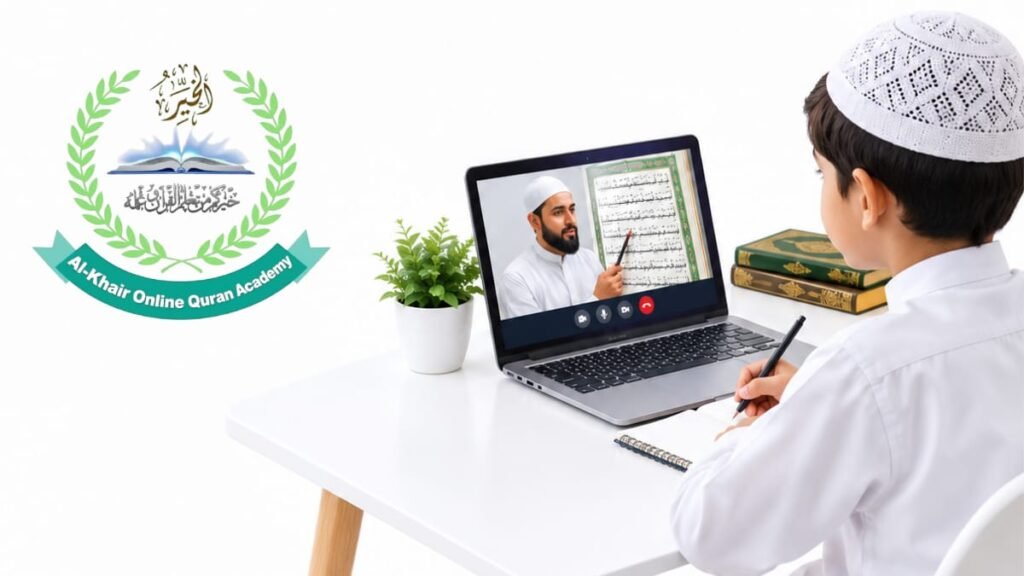
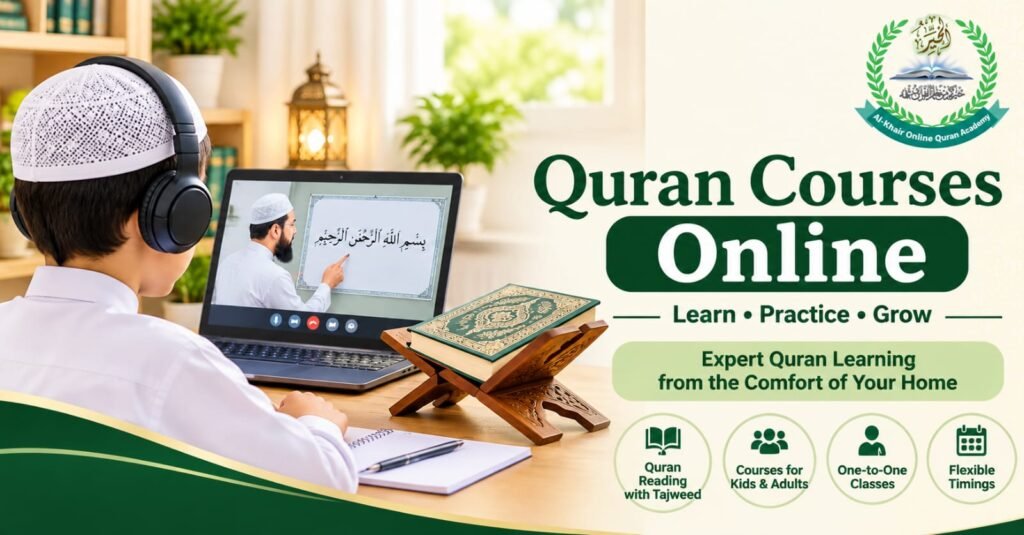
Live lessons with a teacher. You connect with your teacher through a video call using a computer, laptop or tablet. The teacher can see and hear you in real time, which is essential for Quran learning.
Step-by-step guidance. Lessons usually begin with an assessment of your current level. From there, the teacher introduces rules gradually, explains them in clear language, and demonstrates the correct sounds.
Listening and correction. You recite, and the teacher listens carefully. If a letter is slightly off or a rule is missed, the teacher corrects it right away and asks you to repeat until it is comfortable.
Individual practice. Between lessons, you practise what you have learned. Good teachers give clear, manageable tasks so that practice feels purposeful rather than overwhelming.
Flexible scheduling. Online lessons can be arranged around school, work and family routines. This is especially valuable for families living in different time zones or with busy evenings.
All you really need is a stable internet connection, a quiet corner, a device with a microphone and camera, and a copy of the Quran or the learning material your teacher recommends.
Who Can Join Online Tajweed Classes?
Online Tajweed lessons are suitable for a wide range of learners:
- Children who are starting Quran reading or who need help improving their pronunciation.
- Adults and complete beginners who never had the chance to learn properly when they were younger.
- Reverts and new Muslims who want to build a solid foundation at a comfortable pace.
- Regular Quran readers who can read fluently but want to refine their recitation.
- Learners at different levels, from those still working on Arabic letters to those ready to study detailed rules.
A good teacher adapts the lesson to the student, not the other way around. If you are a beginner, you might begin with Arabic letters and basic reading skills. If you already read well, the focus may move directly to Tajweed rules and fluency.
What Will You Learn in Online Tajweed Lessons?
The exact order depends on your level, but most Tajweed courses cover the following core areas.
Makharij al-Huruf (Points of Articulation)
Makharij refers to the places where Arabic letters are produced. These include the throat, the tongue, the lips, the empty space of the mouth and throat, and the nasal passage. Learning where each sound begins helps you pronounce letters clearly instead of guessing.
Sifaat al-Huruf (Characteristics of Letters)
Two letters can come from the same place but still sound different because of their characteristics. Sifaat describe qualities such as whether a letter is pronounced heavy or light, with a strong or gentle flow of breath, or with a firm or soft release. These qualities give each letter its true sound.
Noon Sakinah and Tanween
When a noon carries no vowel (noon sakinah) or when a word ends with tanween, the sound changes depending on the letter that follows. There are four main rules:
- Izhar: pronouncing the noon sound clearly.
- Idgham: merging the sound into the following letter.
- Iqlab: changing the sound to a meem sound before the letter ba.
- Ikhfa: softly concealing the sound with a nasal quality.
These rules appear constantly in the Quran, so they are among the first that students learn to apply.
Meem Sakinah
A meem without a vowel also follows specific rules. Depending on the letter that comes after it, the meem is either merged, lightly hidden, or pronounced clearly. Teachers usually introduce these rules after noon sakinah because many of the ideas are similar.
Madd Rules (Elongation)
Madd means extending a sound for a specific length. Some elongations are short and natural, while others are longer depending on what follows the letter. Learning madd teaches you rhythm and timing, which is a big part of beautiful recitation.
Qalqalah
Qalqalah is a slight echoing or bouncing sound that occurs when certain letters, namely ق, ط, ب, ج and د, are in a state of sukoon. It is a small detail, but it is easy to hear when it is missing, and learners usually enjoy mastering it.
Rules of Stopping and Starting
Nobody can recite an entire passage in a single breath, so Tajweed also teaches how to pause (waqf) and how to resume (ibtida) appropriately. Students learn to recognise stopping signs in the mushaf and to pause in places that do not disturb the meaning. Teachers usually introduce this once a learner reads confidently.
Online Tajweed Classes for Kids
Children learn best when lessons are calm, structured and encouraging. In a well-designed programme for young learners, you can expect:
- Patient teaching. Children need time and kindness. A good teacher never rushes a child or makes them feel embarrassed about mistakes.
- Repetition. Repeating a sound or word several times is a normal and effective way for children to build memory.
- Age-appropriate lessons. Short explanations, simple examples and gentle pacing keep young students engaged.
- Regular practice. Ten or fifteen minutes of daily review at home often helps more than one long session each week.
- Positive reinforcement. Praise for effort builds motivation.
One of the biggest advantages for parents is peace of mind. Your child learns in a familiar environment, and you can sit nearby or listen in if you wish. There is no commute after school, which means your child is less tired and more attentive.
For very young beginners, many academies begin with the Noorani Qaida, a foundational primer that teaches Arabic letters, sounds and basic reading rules before moving on to reading the Quran with Tajweed.
Online Tajweed Classes for Adults and Beginners
If you are an adult who feels hesitant about starting, you are far from alone. Many adults carry a quiet worry that it is “too late” or that they will feel embarrassed. In reality, online learning can be an ideal setting for adults.
- Privacy and comfort. You can make mistakes and ask questions without feeling watched by a classroom.
- Learning at your own pace. There is no pressure to keep up with others.
- Flexible timing. Lessons can fit around work, family and other commitments.
- Starting from the very beginning. If you do not yet know the Arabic letters, a patient teacher can begin there.
- Refining existing skills. If you already read the Quran but have never studied Tajweed formally, lessons can focus on the specific areas that need attention.
Adult learners often find that consistency matters more than speed. Coming to class regularly and practising a little each day will take you further than occasional bursts of effort.
How to Choose the Right Online Tajweed Teacher
The teacher you choose will shape your entire experience, so it is worth taking your time. Consider the following:
- Quran knowledge. The teacher should have solid training in Tajweed and Quran reading, ideally with recognised learning behind them.
- Teaching experience. Knowing the rules is one thing; explaining them clearly to a child or a nervous beginner is another.
- Clear pronunciation. Since you will learn by listening, the teacher’s own recitation should be clear and accurate.
- Patience and kindness. Learners progress best when they feel supported, not judged.
- Lesson structure. Look for a clear plan with defined goals, rather than random or inconsistent lessons.
- Feedback and progress tracking. A good teacher explains what you are doing well and what to work on next. Parents should also receive updates on a child’s progress.
- A trial class. A trial lesson lets you check the teacher’s style, the quality of the audio and video, and whether you or your child feels comfortable.
If possible, also consider whether you would prefer a male or female teacher. Many families feel more at ease when this option is available.
Benefits of Learning Tajweed Online
Online learning is not simply a convenient alternative; it brings several genuine advantages.
One-to-one attention. In a one-to-one lesson, every minute is focused on you or your child. The teacher can hear each mistake and respond immediately.
Learning from home. There is no travel time, and students can learn in a comfortable and safe environment.
Flexible timings. You can choose times that suit your family, which is particularly helpful across time zones such as the USA, UK, Canada and Australia.
Personalised lessons. A lesson plan can be built around your level, goals and pace, rather than following a one-size-fits-all curriculum.
Access to teachers from different locations. You are not limited to teachers who live near you. You can learn from qualified teachers wherever they are based.
Recordings and notes. Some students find it helpful to review notes or recall what was taught, which supports steady improvement.
How Much Time Does It Take to Learn Tajweed?
This is one of the most common questions, and an honest answer is: it depends. Anyone who promises a fixed number of weeks for every student is not being realistic.
Several factors affect your progress:
- Your starting level. A student who already reads Arabic fluently will move faster than someone beginning with the alphabet.
- Lesson frequency. More regular lessons generally lead to steadier progress.
- Daily practice. What you do between lessons matters as much as the lesson itself.
- Consistency. Small, regular effort is more effective than long gaps followed by intense revision.
- Age and learning style. Children and adults learn differently, and both can succeed with the right approach.
Many learners notice improvements in clarity and confidence within the first few months of regular study, while mastering the rules thoroughly takes longer. Tajweed is a skill that grows with practice, and even experienced reciters continue refining it.
Frequently Asked Questions
1. What are Tajweed classes online?
Tajweed classes online are live lessons conducted over video call in which a qualified teacher helps you learn the rules of correct Quran recitation. You listen, recite, receive corrections and practise, just as you would in an in-person class, but from home.
2. Can beginners learn Tajweed online?
Yes. Beginners can start with the basics, such as Arabic letters and sounds, and gradually move to Tajweed rules. A good teacher adjusts the lessons to your level so you never feel lost.
3. Are online Tajweed classes suitable for children?
Yes, they can be very suitable. Children benefit from patient teachers, short and engaging lessons, repetition and regular practice. Parents can also stay close by to support their child at home.
4. Can adults learn Tajweed from home?
Absolutely. Many adults prefer learning from home because it is private, flexible and comfortable. Whether you are starting from zero or improving your recitation, adults can make steady progress with consistent practice.
5. Do I need to know how to read the Quran before learning Tajweed?
Not necessarily. If you cannot read Arabic yet, you can begin with a foundational course such as Noorani Qaida and then move to Tajweed. If you already read, your teacher will assess your level and start from there.
6. How many days a week should I take Tajweed lessons?
There is no single answer, but many students find that three to five lessons per week support steady progress, while fewer lessons can still work for those with limited time. The best schedule is one you can maintain consistently.
7. Can an online teacher correct my Quran pronunciation?
Yes. In a live one-to-one lesson, the teacher hears your recitation in real time, points out mistakes and helps you repeat until the sound is correct. Using a good microphone and a quiet space helps make corrections clearer.
8. How do I choose a good online Tajweed teacher?
Look for strong Quran and Tajweed knowledge, teaching experience, clear pronunciation, patience, a structured lesson plan and regular feedback. Booking a trial class is the easiest way to see whether the teacher is a good fit.
Start Your Quran Learning Journey
Correct recitation is a lifelong journey, and no one begins as an expert. What matters is taking the first step with sincerity and learning with a teacher who is patient and caring. With the right guidance, Tajweed classes online can help you recite more clearly and confidently, whether you are a parent supporting a child or an adult starting again after many years.
If you are looking for a trusted option, Al-Khair Online Quran Academy offers online Quran and Tajweed education designed around the learner. Students can enjoy one-to-one live Quran lessons, choose from male and female teacher options, select flexible class timings and receive personalised learning plans suited to their level. Results naturally vary from student to student, but the academy’s approach focuses on patient guidance and steady progress.
You do not have to decide right away. Al-Khair Online Quran Academy offers three free trial classes, so you or your child can meet a teacher, experience the lesson format and see how comfortable it feels before making any commitment.
Ready to begin? Book your free trial classes today and take the next step toward beautiful, confident Quran recitation.
Tajweed Classes Online: Learn to Recite the Quran Correctly from Home Read More »