Your child comes home from school with questions. Why do we pray five times a day? Who was the Prophet ﷺ? Why can’t I eat what my friends eat? You want to give good answers, but between work, homework, and the busy rhythm of family life in the USA, finding the time and the right words is not always easy.
Weekend school at the masjid helps, but it may be far away, crowded, or only once a week. Meanwhile, your child is forming their sense of who they are every single day, at school, online, and with friends.
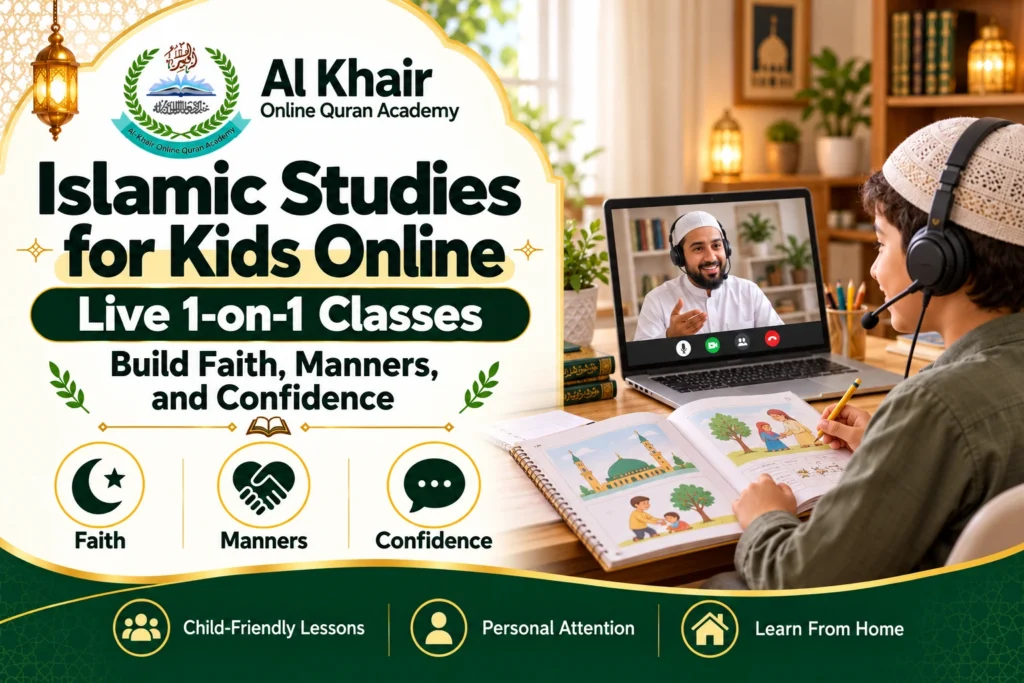
Islamic studies for kids online gives children a steady, friendly place to learn their faith. With a patient teacher on a live video call, your child learns about Allah, the Prophets, salah, duas, and good manners in short lessons designed for their age. At Al-Khair Online Quran Academy, our Duas and Islamic Studies course for kids connects what children learn in class with how they live at home.
This guide explains what children study, how lessons work, how to keep kids engaged, and how parents can support learning between classes.
Why Is Islamic Education Important for Children Growing Up in the USA?
Allah reminds believers in the Quran to protect themselves and their families (Surah At-Tahrim, 66:6). Teaching children their faith is one of the most meaningful ways parents fulfill that trust.
The Prophet ﷺ also taught that every one of you is a guardian responsible for those in your care (Sahih al-Bukhari 893). For parents, that care includes nurturing a child’s heart and understanding, not only their health and schooling.
For Muslim children in the USA, Islamic studies offers some special benefits:
- A clear identity. Children who understand their faith feel more confident explaining it to friends.
- Answers from a trusted source. Kids learn from a teacher instead of piecing things together online.
- Daily habits. Salah, duas, and good manners become part of everyday life.
- Love, not only rules. Stories of the Prophets and Companions help children love Islam, not just follow it.
- A strong base for Quran learning. Understanding why we read the Quran keeps children motivated.
What Do Kids Learn in Online Islamic Studies Classes?
A good Islamic studies program covers several areas, introduced gradually and repeated in age-appropriate ways.
| Topic | What Children Learn | Why It Matters |
|---|---|---|
| Basic beliefs (Aqeedah) | Allah is One, the angels, the Prophets, the Books, and the Last Day | Builds a firm foundation of faith |
| Pillars of Islam | Shahadah, salah, fasting, zakat, and Hajj in simple terms | Helps children understand what Muslims do and why |
| Wudu and Salah | Step-by-step wudu, prayer positions, and what to say | Prepares children to pray on their own |
| Daily duas | Short duas for eating, sleeping, waking, and leaving home | Turns daily routines into remembrance |
| Seerah and Prophets’ stories | The life of the Prophet ﷺ and stories of earlier Prophets | Gives children role models to love and follow |
| Islamic manners (Adab) | Kindness to parents, honesty, sharing, greeting with salam | Shapes character at home and at school |
| Short surahs and meanings | Simple meanings of surahs they already recite | Connects Quran reading with understanding |
What Should Children Learn at Each Age?
Children learn best when lessons match their stage of development. Here is a general guide teachers follow:
- Ages 4 to 6: Allah as Creator, simple duas, the salam greeting, short Prophet stories, and kindness.
- Ages 7 to 9: Wudu and salah step by step, the five pillars, the six articles of faith, and more duas.
- Ages 10 to 12: Seerah in more detail, meanings of short surahs, fasting, and good character in real-life situations.
- Teens: Deeper discussion of faith, handling questions from peers, and the practical side of Islam in daily life.
Your child’s teacher will assess their level in the first lessons and adjust the plan to fit.
How Do Online Islamic Studies Classes Work for Kids?
Each class is a live, one-to-one session, so your child has the teacher’s full attention. Lessons stay short and lively to match young attention spans. A typical class looks like this:
- Warm greeting and review. The teacher checks what your child remembers from last time.
- Story or new topic. A Prophet’s story, a pillar of Islam, or a new dua, explained simply.
- Interactive practice. Questions, repeating duas, or showing a salah position on camera.
- Real-life connection. The teacher links the lesson to something your child does at home or school.
- Small home task. A dua to say at dinner, or a good deed to try during the week.
Many families combine Islamic studies with Quran reading. If your child is just starting to read Arabic, our Noorani Qaida classes for kids guide explains how the two subjects fit together in a weekly routine.
How Do Teachers Keep Kids Engaged Online?
Children learn when they enjoy the lesson. Our teachers use simple, proven methods:
- Storytelling that brings the lives of the Prophets to life
- Short segments that change activity every few minutes
- Praise and encouragement for effort, not only right answers
- Visual aids shared on screen, such as pictures and simple charts
- Questions that invite thinking, like “What would you do if…?”
How Can Parents Support Islamic Learning at Home?
The teacher plants the seeds, but home is where they grow. A few simple habits make a big difference:
- Ask about the lesson. A two-minute chat at dinner helps your child remember.
- Practice duas together. Say the eating and sleeping duas as a family.
- Pray together when you can. Children learn salah fastest by standing beside a parent.
- Retell stories. Ask your child to tell you the Prophet’s story they learned this week.
- Celebrate progress. Notice when your child uses good manners or remembers a new dua.
For younger children, a simple dua chart on the fridge works wonders. Our guide with a printable dua chart for kids is an easy place to start.
How Much Do Islamic Studies Classes for Kids Cost?
Our monthly plans are flexible, with no long-term commitment:
| Plan | Schedule | Monthly Fee |
|---|---|---|
| Special Weekend | 30 minutes, Saturday and Sunday | $30 |
| Starter | 30 minutes, 3 days a week | $40 |
| Standard | 30 minutes, 5 days a week | $60 |
Many families choose the Weekend plan for Islamic studies alongside weekday Quran classes. Every child starts with 3 free trial days, so you can see how your child responds to the teacher before choosing a plan.
Frequently Asked Questions About Islamic Studies for Kids Online
What age should children start Islamic studies?
Many children are ready around age four or five, once they can sit for a short lesson and follow simple instructions. Early lessons focus on Allah as Creator, simple duas, and short stories. As children grow, lessons add salah, the pillars of Islam, seerah, and deeper understanding.
What is included in an Islamic studies curriculum for kids?
A typical curriculum covers basic beliefs, the five pillars, wudu and salah, daily duas, stories of the Prophets, the life of the Prophet ﷺ, Islamic manners, and the meanings of short surahs. Topics are introduced gradually and repeated in age-appropriate ways so children understand and remember them.
Are online Islamic classes effective for young children?
Yes, when lessons are live, short, and interactive. One-to-one classes let the teacher adjust to your child’s mood and pace, ask questions, and keep them engaged. Many children focus better at home than in a busy classroom, and parents can listen in to support learning.
How long is each Islamic studies class for kids?
Our classes are 30 minutes long, which suits most children’s attention spans. Younger children may need a few breaks or a slower pace within the session, and teachers adjust naturally. Regular short lessons work better than long, infrequent ones for building lasting habits.
Can my child learn Quran and Islamic studies together?
Yes. Many families combine both, either within the same weekly plan or on separate days. Quran reading builds skills in Arabic letters and recitation, while Islamic studies explains the faith behind it. Together, they give children a balanced and complete foundation.
Are female teachers available for children?
Yes. Female teachers are available on request, and many families prefer them, especially for young children and girls. Mention your preference when you book your free trial, and we will match your child with a qualified teacher whose schedule fits your family.
How can I tell if my child is making progress?
You will notice your child saying duas on their own, asking thoughtful questions, retelling stories, and showing better manners at home. Teachers also share regular updates, and you are welcome to listen in on lessons. Small daily changes are the clearest sign that learning is taking root.
Give Your Child a Faith They Understand and Love
Children who understand their faith carry it with confidence, at home, at school, and wherever life takes them. Islamic studies for kids online gives them a patient teacher, a steady routine, and lessons that turn knowledge into everyday habits, all from the comfort of home.
Start your child’s journey today. Book 3 free trial days for your child with Al-Khair Online Quran Academy and watch their love for Islam grow, one lesson at a time.

